Understanding High-Ticket Affiliate Marketing: Meaning, Mechanics, and Misconceptions
High-ticket affiliate marketing offers larger commissions through the promotion of expensive products or services. Understanding how it works, why payouts are bigger, and common beginner misconceptions is key to realistic expectations and success.
Jordan specializes in turning complex make money online & online business topics into clear, useful explainers for everyday readers.
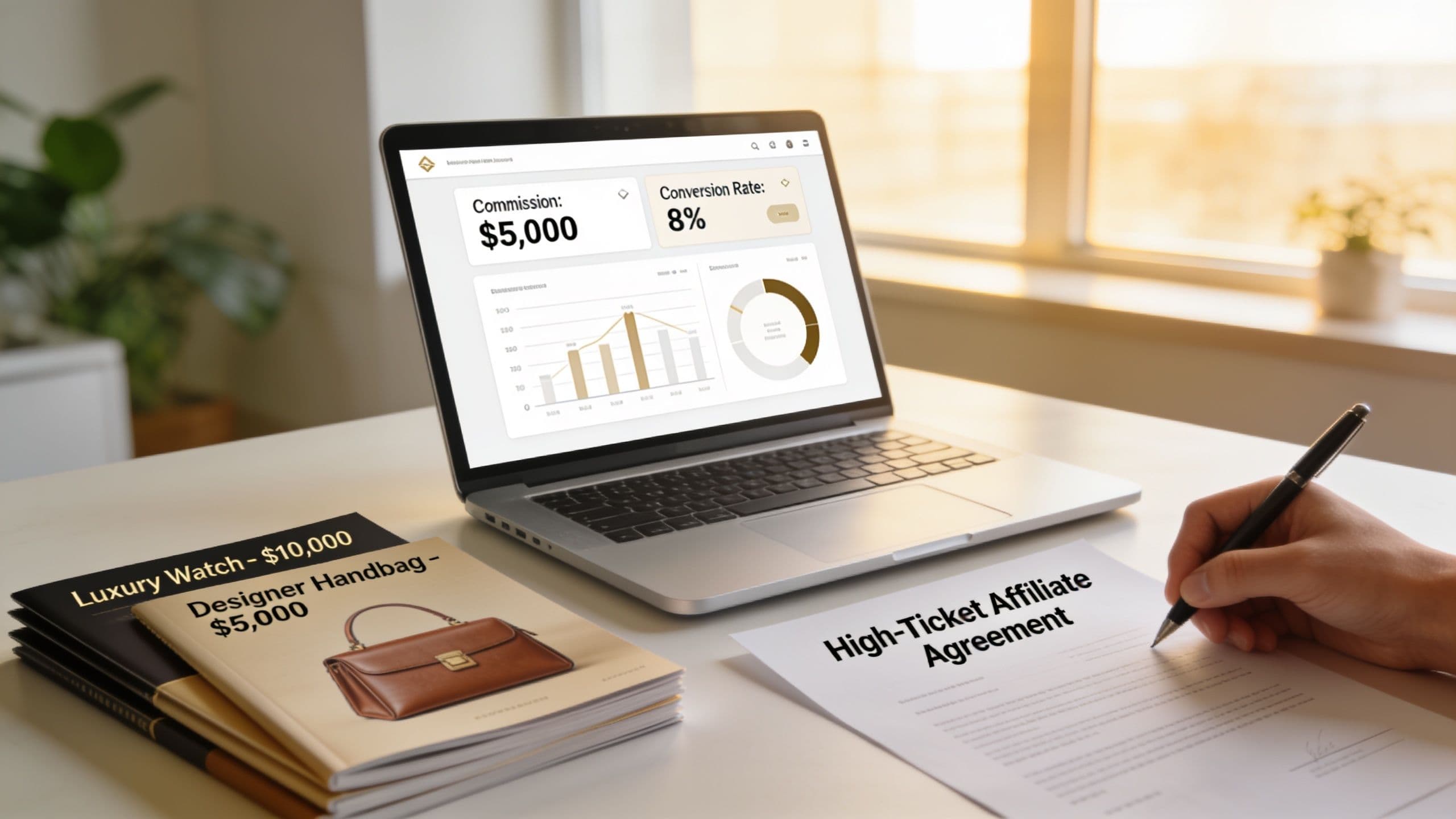
Why the Phrase "High-Ticket Affiliate Marketing" Is Popular and Often Oversimplified
The term "high-ticket affiliate marketing" has gained traction in recent years, especially among newcomers looking for bigger payday affiliate opportunities. Promises of thousands of dollars in commissions from a single sale can sound enticing, but the phrase often gets tossed around without clarity on what it truly means or what’s required to succeed. Simplistic portrayals can give the impression that high-ticket affiliate marketing is a quick path to easy money, a notion that beginners frequently misunderstand.
What High-Ticket Affiliate Marketing Actually Means
In affiliate marketing, "ticket" refers to the price point of the product or service sold. High-ticket affiliate marketing involves promoting products or services that carry a high sale price, typically ranging from several hundred dollars to several thousands. Common examples include luxury vacations, premium software subscriptions, coaching programs, expensive electronics, or high-end business services.
To put it concretely, while a typical affiliate sale might be a $50 eBook with a $10 commission, a high-ticket affiliate sale might involve a $2,000 online course with a $500 commission or more. The "high-ticket" label is somewhat subjective, but products or services priced above $500 to $1,000 generally fall into this category.
How High-Ticket Affiliate Marketing Works
At its core, high-ticket affiliate marketing functions like any affiliate model: affiliates promote a product or service through unique referral links. When a referred customer completes a purchase, the affiliate earns a commission. However, the promotional methods and sales funnels tend to be more complex due to the higher price points involved.
High-ticket offers often rely on consultation calls, webinars, or in-depth sales funnels to educate and convert prospective buyers, rather than simple direct clicks to a sales page. Attribution models track which affiliate led the customer through this longer journey. Because of the heavier investment, buyers typically demand more information and trust before purchasing.
Why Commissions Are Higher
High-ticket commissions are proportionally larger because the products or services cost significantly more. For example, a 25% commission on a $2,000 product yields $500 for the affiliate, whereas the same percentage on a $50 product yields just $12.50.
There are a few reasons companies offer high-ticket affiliate commissions:
Higher Price Points and Margins: Luxury or specialized offerings have greater profit margins allowing for lucrative affiliate payouts.
Recurring Revenue or Service Contracts: Many high-ticket programs are subscription or service-based, enabling affiliates to earn ongoing commissions.
Exclusive or Premium Nature: Affiliates help sell offerings requiring personalized education or heavy client support, justifying higher commissions.
Typical Channels Used to Promote High-Ticket Offers
Because of the need to build trust and explain value deeply, high-ticket affiliate marketers often use channels that allow for richer content and relationship-building:
SEO (Search Engine Optimization): Ranking detailed reviews or educational content to attract qualified leads.
YouTube: Creating video walkthroughs, tutorials, or testimonials.
Webinars: Hosting live or automated seminars to present the offer comprehensively.
Email Marketing: Using sequences to nurture leads and answer objections.
Consultative Content: Blog posts or videos analyzing industry issues and solutions to build authority.
What Beginners Get Wrong About High-Ticket Affiliate Marketing
One of the biggest misconceptions is that bigger commissions mean easy money. In reality, closing a high-ticket sale typically requires more effort, time, and expertise. Beginners often underestimate the work required to build trust, answer buyer questions, and guide prospects through the sales funnel.
Additionally, newcomers may expect immediate traffic and fast conversions, but the lead nurturing process for high-ticket offers can take weeks or months.
Skills That Matter Most for High-Ticket Affiliate Marketing
Successful high-ticket affiliates focus heavily on:
Trust Building: Establishing credibility through authentic content and relationship-focused engagement.
Audience Targeting: Reaching the right demographic who can afford and need the high-priced solution.
Content Depth: Providing thorough explanations, comparisons, and case studies.
Effective Follow-Up: Utilizing email and retargeting to stay top of mind and support the purchase decision.
These skills differentiate a high-ticket marketer from one promoting lower-cost, impulse-buy products.
Pros and Cons of High-Ticket Affiliate Marketing
| Pros | Cons | |-------------------------------------|------------------------------------------| | Larger commissions per sale | Longer sales cycles with fewer conversions | | Potential for recurring income | Greater upfront effort to educate buyers | | Access to premium products and niches | Higher competition in lucrative markets |
While the financial rewards are attractive, the complexity and time investment can be significant.
Is High-Ticket Affiliate Marketing Right for You?
Assessing whether this model fits your background and goals involves:
Experience: Beginners may benefit from starting with lower-ticket offers to build skills before tackling high-ticket sales.
Niche: Some niches naturally accommodate high-ticket products better (e.g., business services, luxury travel).
Audience: Having an existing audience interested in premium solutions improves your chances.
Willingness to Invest Time: High-ticket sales rarely happen without a sustained, value-driven marketing approach.
If you’re ready to commit to learning consultative marketing and developing trust-centered content, high-ticket affiliate marketing can be a lucrative avenue.
---
High-ticket affiliate marketing is not a shortcut but a specialized branch within affiliate marketing with its own challenges and rewards. Understanding the mechanics, realistic expectations, and necessary skills upfront can help you strategize effectively and build a sustainable income stream from high-value commissions.
Safety & Scope
This article is for general informational purposes and does not replace professional advice for complex repairs or installations.
Frequently Asked Questions
+What is considered high-ticket in affiliate marketing?
High-ticket typically refers to products or services priced above $500 to $1,000, where affiliates earn larger commissions due to the higher price points.
+How much can a high-ticket affiliate commission pay?
Commissions can range from hundreds to thousands of dollars per sale, depending on the product price and the commission percentage offered by the affiliate program.
+Is high-ticket affiliate marketing legit?
Yes, high-ticket affiliate marketing is a legitimate model used by many companies to incentivize affiliates to promote expensive products or services. However, success requires effort, skills, and realistic expectations.
+Do beginners need an audience to do high-ticket affiliate marketing?
While having an existing audience can help, beginners can build one over time through content marketing, SEO, and engagement. However, high-ticket marketing demands trust, so cultivating an audience or community is often important.