Comparing Subscription Boxes With Replenishment Stores for Recurring Ecommerce Revenue
Examining the strengths and challenges of subscription boxes versus replenishment stores reveals which recurring ecommerce model is easier to start, operate, and retain customers for founders building sustainable revenue.
Maya covers make money online & online business with an emphasis on practical analysis, products, and real-world impact.
Why Recurring Ecommerce Is Attractive
Recurring revenue models have become the backbone of modern ecommerce due to their potential for predictable income, improved cash flow forecasting, and stronger customer lifetime value. For ecommerce founders, recurring sales reduce dependence on one-time purchases and can provide a steady foundation for growth. Two prominent models anchored in recurring revenue are subscription boxes and replenishment stores, each with distinct operational frameworks and customer dynamics.
How Subscription Boxes Work
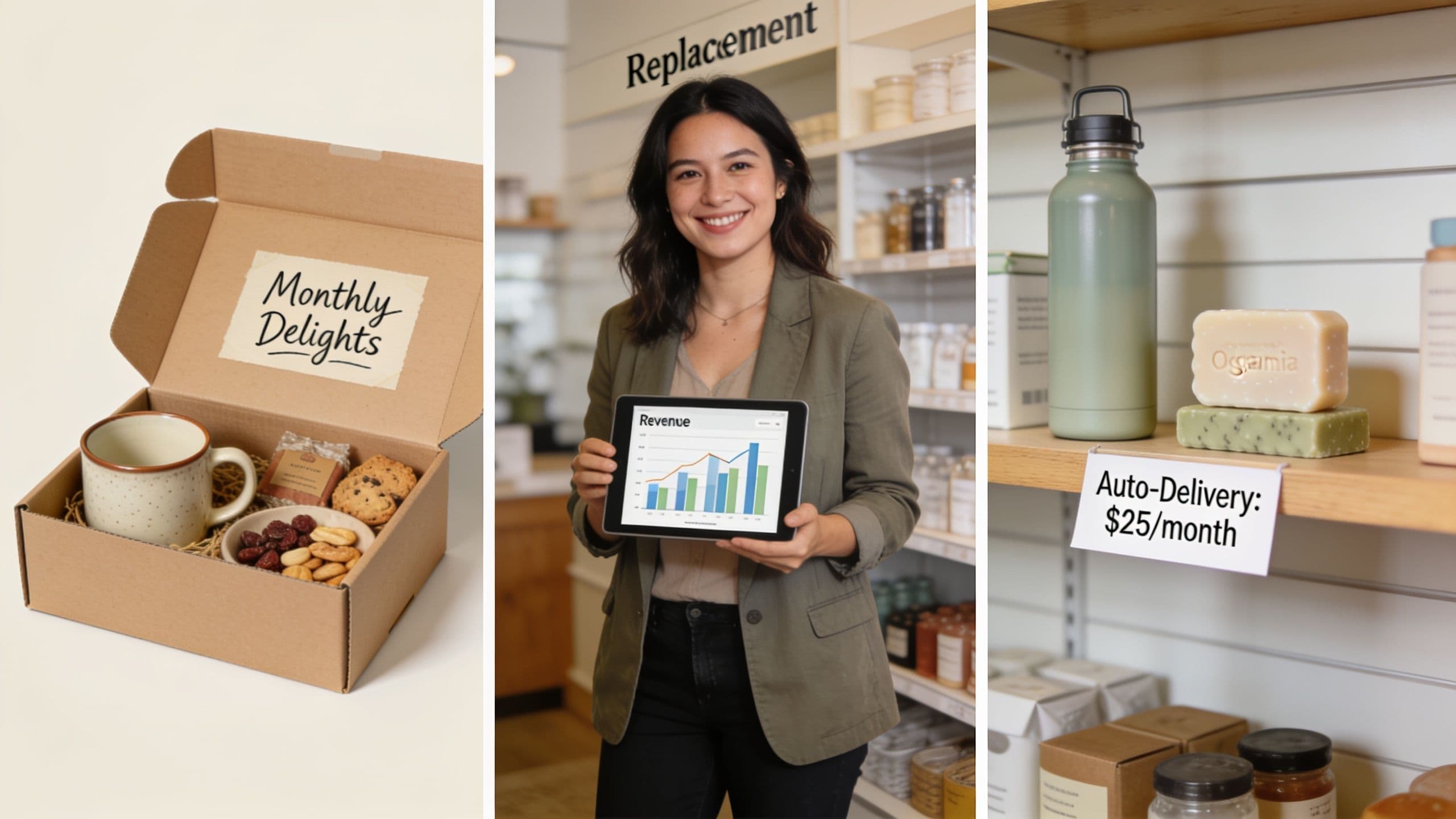
Subscription boxes typically curate a selection of products delivered on a regular cadence, often monthly, that surprises or delights subscribers with a themed assortment. Popular examples include beauty boxes like Birchbox, snack boxes such as Graze, or niche lifestyle offerings like FabFitFun. The core proposition is discovery and excitement, where customers receive new or curated items that may introduce them to new brands or products.
Subscription boxes require strong supplier relationships, trend awareness, and logistics management of varied inventory. Their appeal lies in the experience — unboxing, exploring, and receiving a personalized or novel bundle — which can foster emotional engagement.
How Replenishment Stores Work
Replenishment ecommerce focuses on the predictable reordering of essential consumables that customers use repeatedly, such as razors (Dollar Shave Club), vitamins, pet food, or household consumables. The model is built on convenience and removing the friction of remembering to reorder. Customers subscribe to receive set quantities of a product at regular intervals, often with options for customization in frequency or quantity.
This model thrives on simplicity, product reliability, and supply chain efficiency due to usually fewer SKUs and predictable fulfillment needs. It targets practical needs rather than novelty.
Operational Differences and Fulfillment Complexity
Subscription boxes demand complex inventory management because each box can contain multiple SKUs that vary monthly, raising warehousing and packing complexity. The merchandising team plays a vital role in curating boxes that align with customer preferences and seasonal trends. Packaging and branding are critical since the unboxing experience forms part of the product.
By contrast, replenishment stores operate with fewer SKUs and more standardized packaging. Their fulfillment tends to be simpler and more scalable, allowing automation in picking, packing, and shipping. Customer service focuses on managing subscription adjustments and ensuring timely delivery.
Customer Retention Patterns in Both Models
Subscription box brands often face higher churn rates because subscriber interest may wane if the novelty fades or if customers do not find continuing value in new offerings. Retention strategies include personalized selections, loyalty programs, and upselling complementary products.
Replenishment stores usually benefit from inherently higher retention since customers rely on these products regularly and often integrate them into daily routines. However, these brands must manage pricing competitiveness and ensure flawless supply to avoid losing subscribers.
Margin Considerations and Startup Costs
Subscription boxes can have tighter margins due to costs incurred from diverse inventory purchases, packaging, and marketing to attract and retain customers. The curated nature also means forecasting demand can be challenging, risking overstock or waste.
Replenishment stores often enjoy higher gross margins because of bulk purchasing and simpler logistics. Their startup costs tend to be lower because of the simpler product assortment and streamlined fulfillment processes.
Which Model Fits Different Founder Strengths
Founders with strong curatorial instincts, marketing creativity, and willingness to manage complex inventory might excel with subscription boxes. This model favors innovative brand building and close customer engagement.
Conversely, founders who prioritize operational efficiency, logistics, and scaling steady-demand products may find replenishment stores easier and more predictable to launch and operate with modest budgets. The model suits those focused on convenience-driven ecommerce solutions.
Ultimately, the choice depends on product category, target customer behavior, and founder skill sets. Both models present viable paths to recurring ecommerce revenue but require tailored strategies for growth and retention.
---
For ecommerce founders evaluating recurring revenue models, understanding these operational and customer dynamics can guide smarter decisions on launching a sustainable, growth-oriented subscription business.
Safety & Scope
This article is for general informational purposes and does not replace professional advice for complex repairs or installations.
Frequently Asked Questions
+What is the difference between subscription boxes and replenishment ecommerce?
Subscription boxes offer curated, often surprise assortments of products delivered regularly to customers, emphasizing discovery and experience. Replenishment ecommerce provides repeat orders of essential, consumable products that customers need continuously and predictably.
+Which recurring ecommerce model is easier to launch?
Replenishment stores tend to be easier to launch due to their simpler product assortment, straightforward logistics, and lower startup costs compared to the complex inventory and packaging needs of subscription boxes.
+Do subscription boxes have better margins than replenishment products?
Generally, replenishment models offer higher gross margins because of bulk purchasing and simpler fulfillment, while subscription boxes often have tighter margins caused by diverse inventory, packaging, and marketing expenses.
+How do you choose a recurring ecommerce model?
Choosing a model depends on your product category, operational strengths, budget, and target customer preferences. Subscription boxes fit brands prioritizing curation and experience, while replenishment suits founders aiming for operational efficiency and predictable demand.