Ecommerce Margins Improve Faster with Post-Purchase Offers Than New Traffic
For ecommerce store owners facing weak profitability, boosting margins through steady new customer acquisition can be costly and slow. Leveraging post-purchase offers to monetize existing buyers presents an efficient path to faster margin expansion and sustainable growth.
Jordan specializes in turning complex make money online & online business topics into clear, useful explainers for everyday readers.
Why Traffic Growth Does Not Always Fix Margins
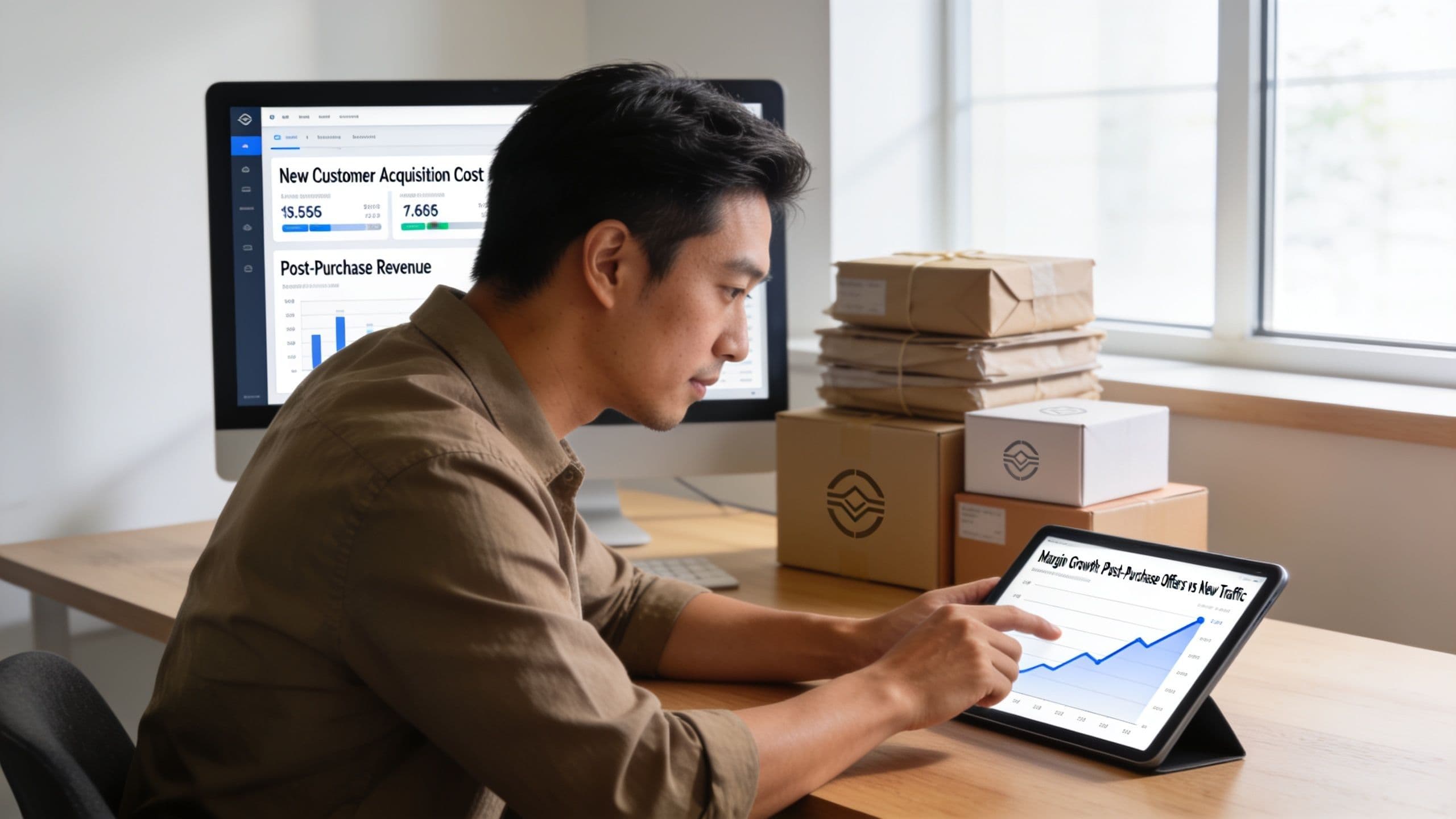
Acquiring new customers is often seen as the primary lever for ecommerce growth. However, increasing traffic comes with significant costs—advertising spends rise, customer acquisition cost (CAC) climbs, and competition intensifies. For many stores, higher visitor numbers don’t translate into proportional profit increases because margins get squeezed by acquisition expenses.
Moreover, new customers tend to have lower conversion rates and smaller average order values (AOV) initially. It takes repeated interactions and nurturing to convert them into profitable lifetime relationships. As such, relying solely on new traffic to improve margins can be slow, expensive, and unpredictable.
What Post-Purchase Offers Actually Include
Post-purchase offers refer to relevant product recommendations or add-ons presented to customers immediately after their initial purchase but before the final transaction confirmation. This includes upsells, cross-sells, or limited-time deals delivered on the thank-you page or through a follow-up email within minutes or hours.
Unlike traditional upsell attempts during the checkout flow—which can disrupt the purchase process—post-purchase offers capitalize on the customer's buying momentum without risking cart abandonment. Customers have already committed to a purchase, making them more receptive to complementary offers.
Best Products for One-Click Upsells and Add-Ons
Effective post-purchase offers tend to be low-friction, highly relevant items priced to encourage impulse buys. Typical categories include:
Accessories that complement the original product (e.g., phone cases with a phone)
Consumables or replenishable products (e.g., skincare refills after a skincare purchase)
Premium enhancements or extended warranties
Bundle deals offering better value than individual purchases
Selecting the right products requires analyzing your existing catalog and customer behavior data to identify frequent pairings and cross-purchase patterns. Pricing should strike a balance—valuable enough to add to the order but not so expensive they cause second thoughts.
Where Post-Purchase Offers Fit in the Customer Journey
Post-purchase offers sit between the initial transaction and the shipment or delivery phase. This window is critical because the buyer is mentally engaged and expects communication, but the order isn’t finalized yet.
This stage also represents an emotional peak—customers feel satisfaction and trust with the brand, which can be leveraged to deepen the relationship. Successfully implemented post-purchase upsells increase the average order value and enhance customer lifetime value (CLV) without requiring new acquisition.
However, timing, tone, and transparency are key. Offers should be clearly presented as optional add-ons that won’t delay fulfillment, maintaining a trust-based experience.
Metrics That Reveal Whether the Strategy Works
To understand if post-purchase offers improve margins, stores should monitor:
Uptake rate: Percentage of customers accepting post-purchase offers
Incremental revenue: Additional sales generated from upsells compared to previous baseline
Average order value: Change in AOV with post-purchase offers enabled
Customer satisfaction scores: To ensure offers don’t negatively impact experience
Return rates: Monitoring if post-purchase additions lead to higher returns, which can erode margins
A/B testing different offers, pricing, and copy can help optimize the impact, supported by consistent tracking over weeks rather than days.
Offer Design Mistakes That Lower Trust
Missteps in post-purchase strategies can harm customer trust and brand reputation:
Surprising extra charges: If customers feel 'trapped' into adding items or perceive hidden fees, satisfaction drops.
Pushy language: Aggressive upsell tactics alienate buyers instead of enticing them.
Complex checkout interruptions: If adding post-purchase products delays processing or complicates payments, it frustrates customers.
Irrelevant offers: Showing unrelated or low-value products signals poor segmentation and wastes opportunities.
Avoiding these pitfalls preserves customer goodwill and sets the foundation for repeat purchases.
Tools and Platforms That Support Implementation
Several ecommerce platforms and third-party tools facilitate seamless post-purchase offers:
Shopify apps such as ReConvert and Zipify OneClickUpsell provide turnkey solutions with easy integration.
WooCommerce plugins like CartFlows and WooCommerce One Click Upsell help customize post-purchase funnels.
Dedicated CRO tools and personalization engines can automate offer delivery based on buyer profiles.
Selecting a platform that supports one-click post-purchase upselling without requiring customers to re-enter payment details improves conversion and user experience.
A Phased Optimization Plan for Small Stores
For smaller stores, jumping immediately to complex post-purchase strategies can be overwhelming. Instead, consider a phased approach:
1. Audit current purchase data: Identify product pairs and past upsell opportunities. 2. Introduce simple post-purchase offers: Start with one or two high-potential items and track uptake. 3. Test offer presentation: Experiment with timing, copy, and pricing. 4. Analyze impact: Use your chosen metrics over at least 30 days. 5. Expand or refine: Based on results, broaden the offer catalog or tweak offers.
With steady iteration and customer feedback, stores can unlock meaningful margin improvements faster than waiting for new traffic spikes.
Leveraging post-purchase offers holistically reorients ecommerce profitability strategies toward monetizing existing customers before investing heavily in acquisition, empowering store owners to build more sustainable and scalable businesses.
Safety & Scope
This article is for general informational purposes and does not replace professional advice for complex repairs or installations.
Frequently Asked Questions
+What is a post-purchase offer in ecommerce?
A post-purchase offer is a relevant product recommendation or upsell presented to customers immediately after they complete their initial purchase but before the final transaction confirmation. It aims to increase the order value without interfering with the checkout process.
+Do post-purchase upsells hurt customer satisfaction?
When implemented thoughtfully—using clear communication, relevant products, and frictionless checkout—post-purchase upsells do not harm customer satisfaction. However, pushy tactics, hidden fees, or irrelevant offers can damage trust.
+Which stores benefit most from this strategy?
Stores with existing sales but weak profitability benefit most from post-purchase offer strategies, especially those with complementary products, consumables, or accessories that can be offered as compelling add-ons to increase average order value.