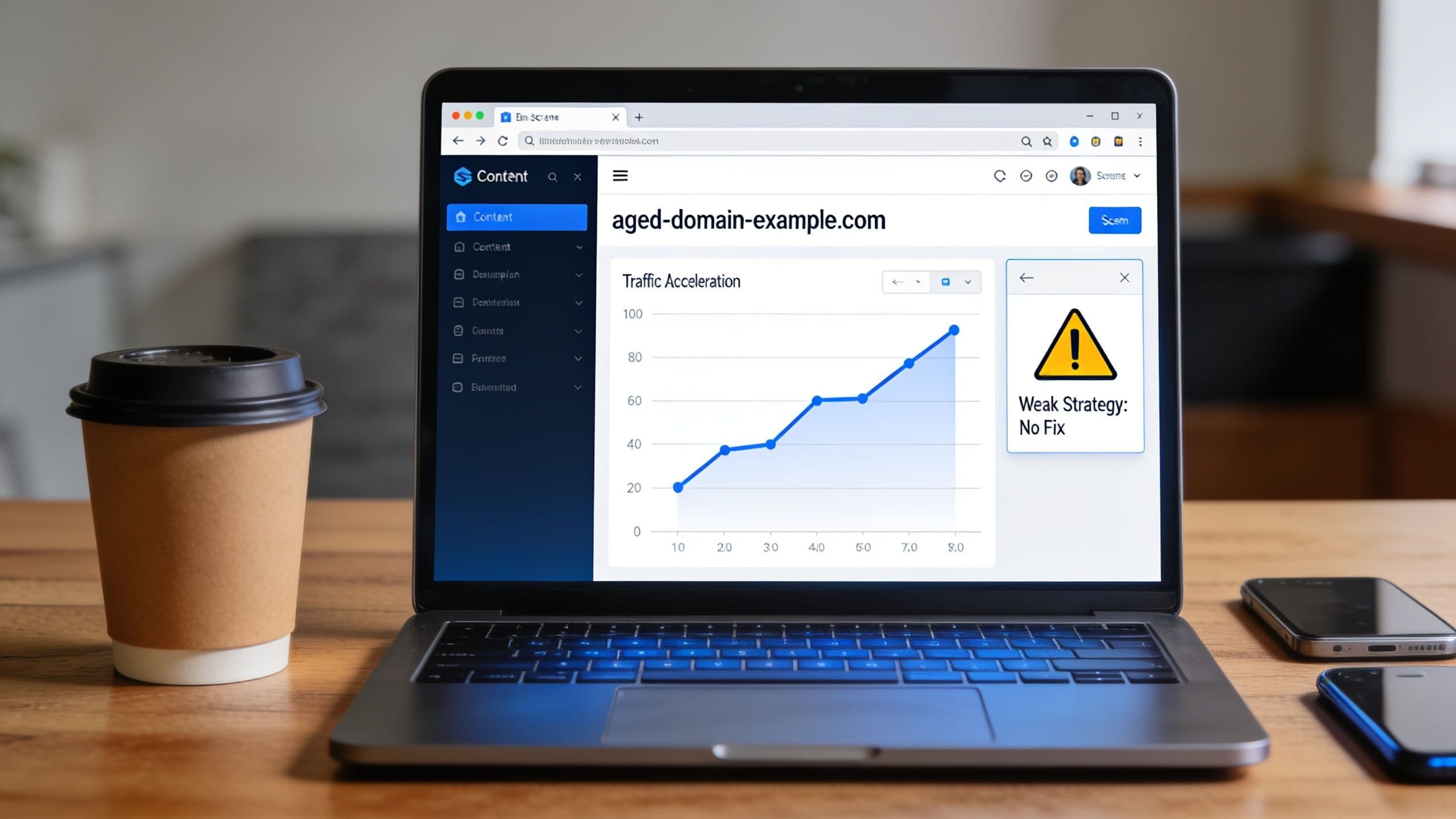
Aged Domains Can Accelerate Content Sites, but They Do Not Fix Weak Strategy
Aged domains offer enticing shortcuts for new content sites by leveraging existing authority and history. Yet, they neither guarantee success nor compensate for poor strategic planning. Understanding their benefits and pitfalls helps site builders decide when and how to deploy aged domains effectively.
Avery writes about trends, platforms, and strategic shifts in make money online & online business, with attention to what matters in practice.
The Appeal of Aged Domains for New Sites
Buying an aged domain often feels like acquiring a shortcut in the competitive world of content and affiliate marketing. Instead of starting from scratch, site builders hope to inherit existing backlinks, domain authority, and SEO goodwill. These early advantages can potentially lead to quicker rankings on search engines and faster traffic growth compared to brand-new domains.
For creators focused on monetization timelines or entering crowded niches, aged domains represent an alluring proposition. The notion that you’re not “starting over” injects optimism and a sense of progress that a fresh domain doesn't immediately provide.
What Advantages They May Actually Provide
While results vary significantly, several benefits commonly associated with aged domains bear merit:
Pre-existing backlinks: Quality backlinks to the aged domain can boost initial domain authority and help new content rank faster if those links are still relevant and live.
Historical trust signals: Search engines often view older domains as more trustworthy, assuming they have a clean backlink profile and consistent history.
Indexed pages: The domain may retain some indexed pages, facilitating faster discovery and indexing of your new content.
Avoiding sandbox effects: New domains sometimes experience temporary ranking suppression (the “sandbox effect”). Aged domains can sidestep this phenomenon.
These advantages can accelerate the moment a content site begins to attract organic traffic, providing a foundation stronger than a fresh start.
The Risks: Bad Links, Irrelevant History, False Expectations
Despite the upsides, aged domains come loaded with potential hazards that can undermine success:
Toxic backlinks: Domains may have been abused for spam or black-hat tactics before, leading to penalties or ranking struggles that require extensive cleanup.
Irrelevant thematic history: If previous content or backlinks are unrelated to your niche, search engines may struggle to correlate your new content with the domain's past, diluting topical authority.
Penalty baggage: Some aged domains carry Google penalties or manual actions invisible without thorough investigation.
False expectations: The belief that aged domains provide a guaranteed boost disregards the importance of ongoing strategy, content quality, and audience targeting.
For example, an affiliate site built on an aged domain previously used for unrelated or low-quality content may fail to rank well despite the domain’s age and backlinks.
Due Diligence Before Buying
Evaluating an aged domain is critical to ensuring any advantage is genuine rather than illusory:
Examine backlink quality: Use tools like Ahrefs or Majestic to assess backlink profiles. Scrutinize link relevance, authority, and presence of spammy or paid links.
Investigate domain history: Check the Wayback Machine to understand previous website content and purpose, verifying thematic alignment.
Google penalty checks: Use Google Search Console (if access is possible) or observe search rankings history for sudden drops indicative of penalties.
Assess domain authority and trust metrics: Look for consistent domain rating trends rather than spikes signaling manipulation.
Trademark and legal considerations: Make sure the domain name doesn’t infringe trademarks to avoid future disputes.
Taking these steps reduces surprises and lays groundwork to leverage the domain effectively.
How to Relaunch Without Wasting the Asset
To maximize value from an aged domain:
1. Align new content with historical themes: While you don’t have to replicate old content, maintaining topical relevance assists SEO. 2. Disavow harmful backlinks: Remove or disavow spammy links to improve trustworthiness. 3. Build a solid content strategy: Aged domains don’t substitute for quality, original content that fulfills user intent. 4. Monitor performance: Regularly track rankings, index status, and backlink health to catch issues early. 5. Use 301 redirects cautiously: If repurposing the domain, avoid redirecting irrelevant legacy URLs that might confuse search engines.
Done well, an aged domain can be the foundation for a thriving content site rather than a dormant liability.
When a Fresh Domain Is the Smarter Move
There are scenarios where starting fresh outperforms chasing aged domains:
Low-budget projects: Conducting thorough aged domain due diligence can be costly and time-consuming.
Niche shifts: Building authority in a niche unrelated to the aged domain’s history may cause SEO mismatches.
Branding considerations: Fresh brands often prefer new domains to avoid inheriting previous reputations, positive or negative.
Minimal risk tolerance: Fresh domains avoid hidden legacy penalties or links and offer a clean slate.
Ultimately, choosing between aged and fresh domains depends on strategic goals, resources, and niche alignment. Neither approach guarantees success, and both demand ongoing effort.
Aged domains can accelerate content site growth when carefully chosen and paired with strong, relevant content strategies. However, they cannot compensate for weak planning or poor execution—making them a potential boost, not a cure.
Safety & Scope
This article is for general informational purposes and does not replace professional advice for complex repairs or installations.
Frequently Asked Questions
+Do aged domains help SEO for new content sites?
Aged domains can provide SEO advantages such as existing backlinks, historical trust, and faster indexing, which may help new content sites achieve quicker rankings. However, these benefits depend heavily on the domain's backlink quality and relevance to the new content niche. Without strong content and strategy, an aged domain alone won't guarantee SEO success.
+How do you evaluate an aged domain before buying?
Evaluating an aged domain requires examining its backlink profile using tools like Ahrefs or Majestic for link quality and relevance, checking the domain's historical content on the Wayback Machine, verifying the absence of Google penalties or manual actions, reviewing trust and authority metrics, and ensuring there are no trademark or legal issues associated with the domain name.
+Can an aged domain rescue a weak niche website idea?
No, an aged domain cannot rescue a weak niche website idea. While it may provide some initial SEO benefits, success ultimately depends on the strength of the niche, relevance and quality of the content, and overall site strategy. A weak idea with poor market fit or content quality will struggle regardless of the domain's age or history.